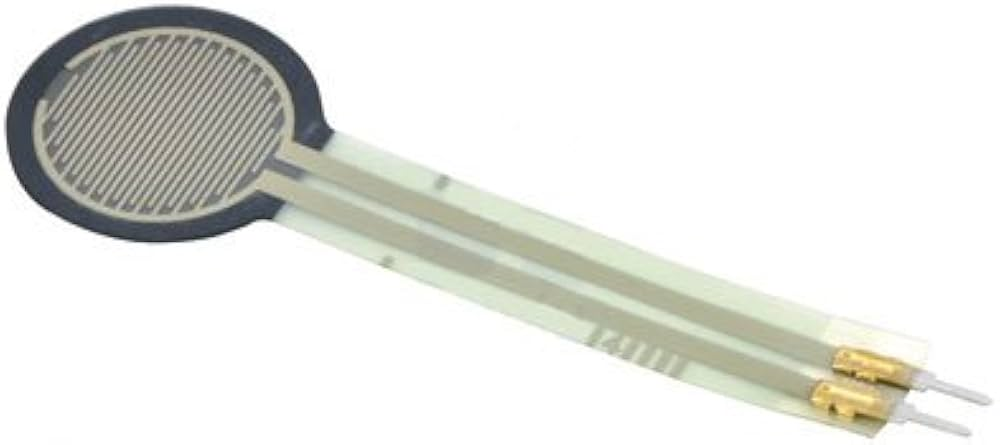
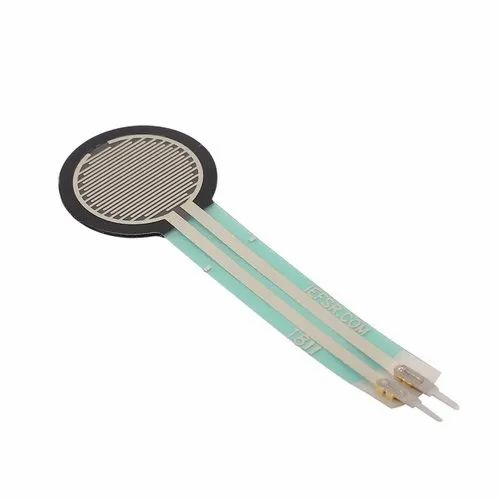
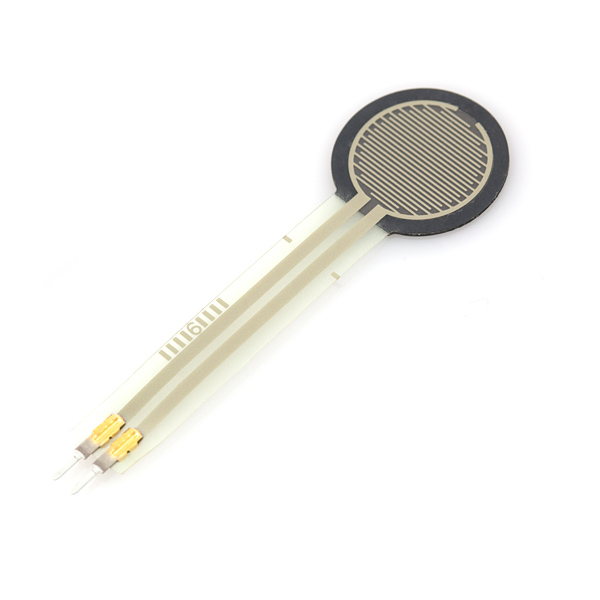

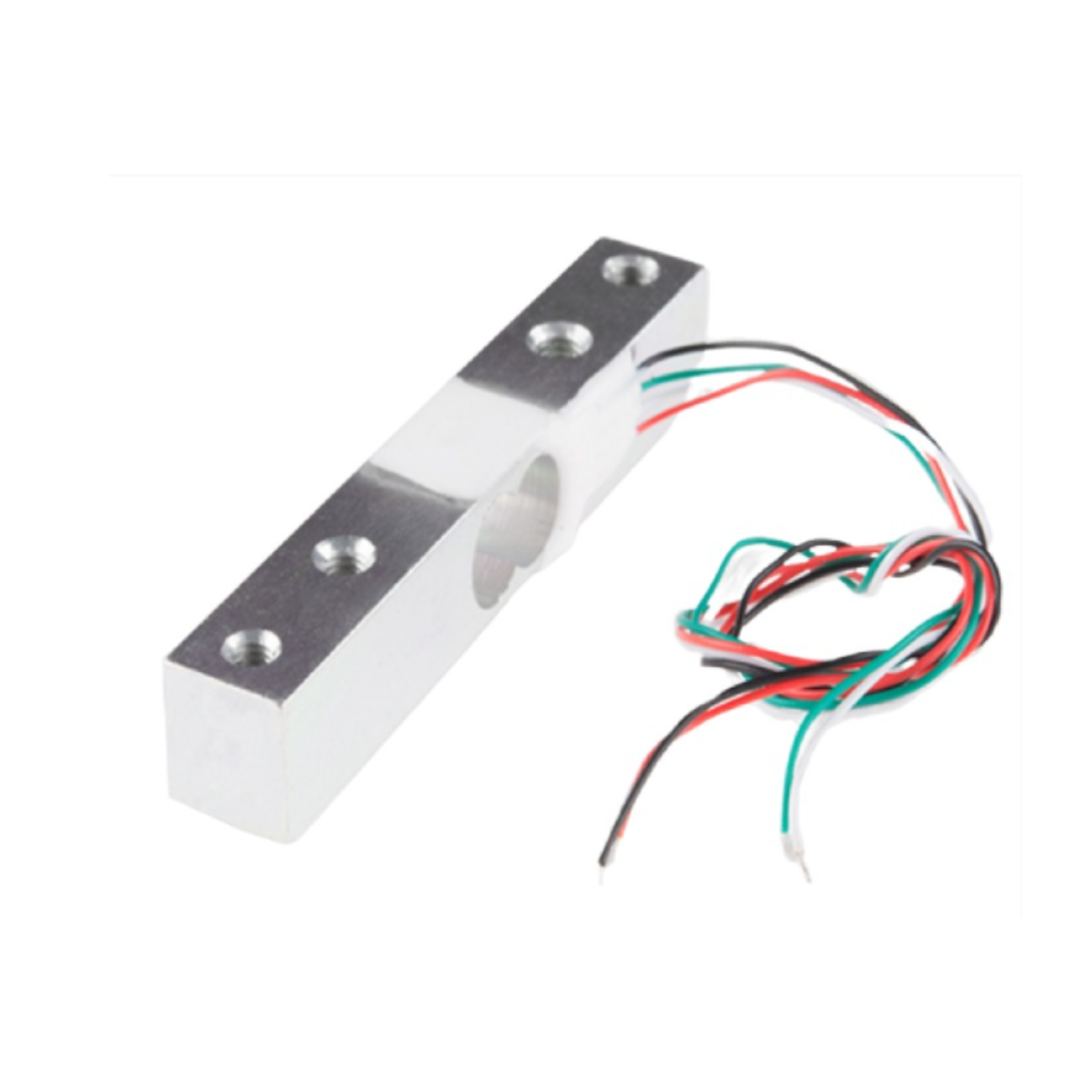

 Force Sensitive Resistor (FSR) Sensor (Big) Overview
- Type: Force Sensitive Resistor (FSR).
- Functionality:
- Force Measurement: Measures the force or pressure applied to its surface by changing its resistance.
- Analog Output: Provides an analog voltage signal that varies with the applied force.
- Specifications:
- Size: Large size variant, typically around 38mm in diameter for the sensing area.
- Operating Voltage: Typically 5V, but can operate with a range of voltages.
- Resistance Range: High resistance when no force is applied (~MΩ), decreasing to a lower resistance (~kΩ) as force increases.
- Force Range: Can typically detect forces from a few grams to several kilograms.
- Features:
- Thin and Flexible: Can be easily integrated into various applications due to its slim profile and flexibility.
- Simple Interface: Easy to connect to microcontrollers and other electronics with basic circuitry.
- Wide Force Range: Capable of detecting a broad range of force levels.
Typical Uses:
- Robotics: Used in robotic grippers to measure the force applied to objects.
- Wearable Devices: Integrated into wearable technology to monitor pressure or force.
- Gaming Controllers: Used in controllers to detect the amount of pressure applied by the user.
Key Benefits:
- Sensitivity: High sensitivity to changes in applied force, making it suitable for precise force measurement.
- Ease of Integration: Simple to connect and use with microcontroller platforms like Arduino.
- Versatility: Suitable for a variety of applications requiring force or pressure sensing.
Example Applications:
- Pressure Mapping: Used in mats or surfaces to detect pressure distribution.
- Musical Instruments: Integrated into electronic musical instruments to detect touch pressure.
- Medical Devices: Used in devices to monitor force applied by patients or users.
How to Use:
- Connect to Microcontroller:
- Wiring: Connect one end of the FSR to a power supply (e.g., 5V) and the other end to a voltage divider circuit (typically a fixed resistor to ground and the junction connected to an analog input pin).
- Read Analog Signal: Use the analog input pin on the microcontroller to read the voltage signal from the FSR.
- Convert to Force: Convert the analog reading to a force value using a calibration curve or formula specific to the FSR model.
- Calibrate if Necessary: Perform calibration to improve accuracy, if required.