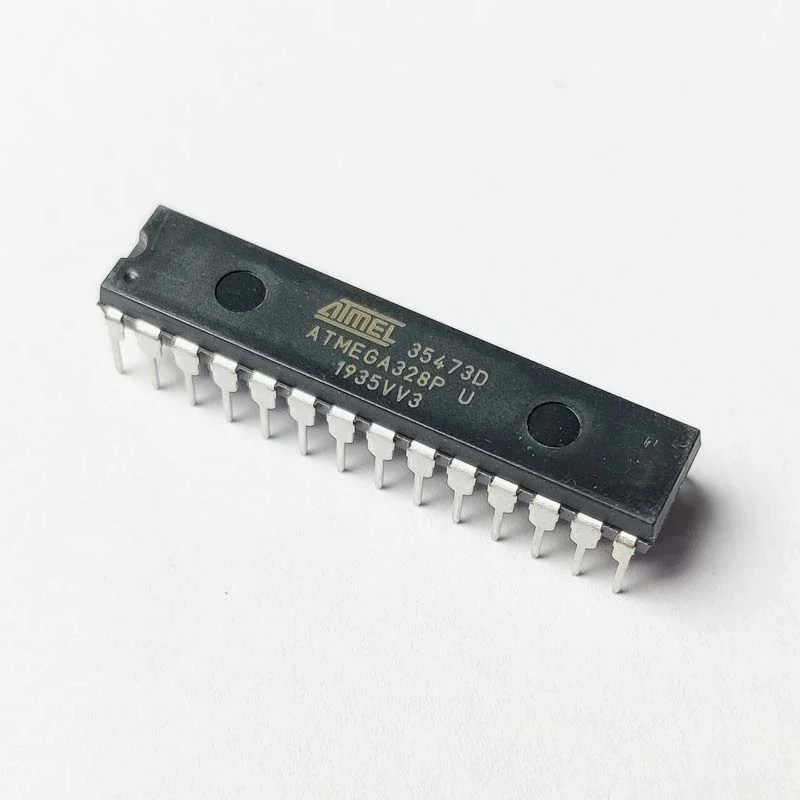
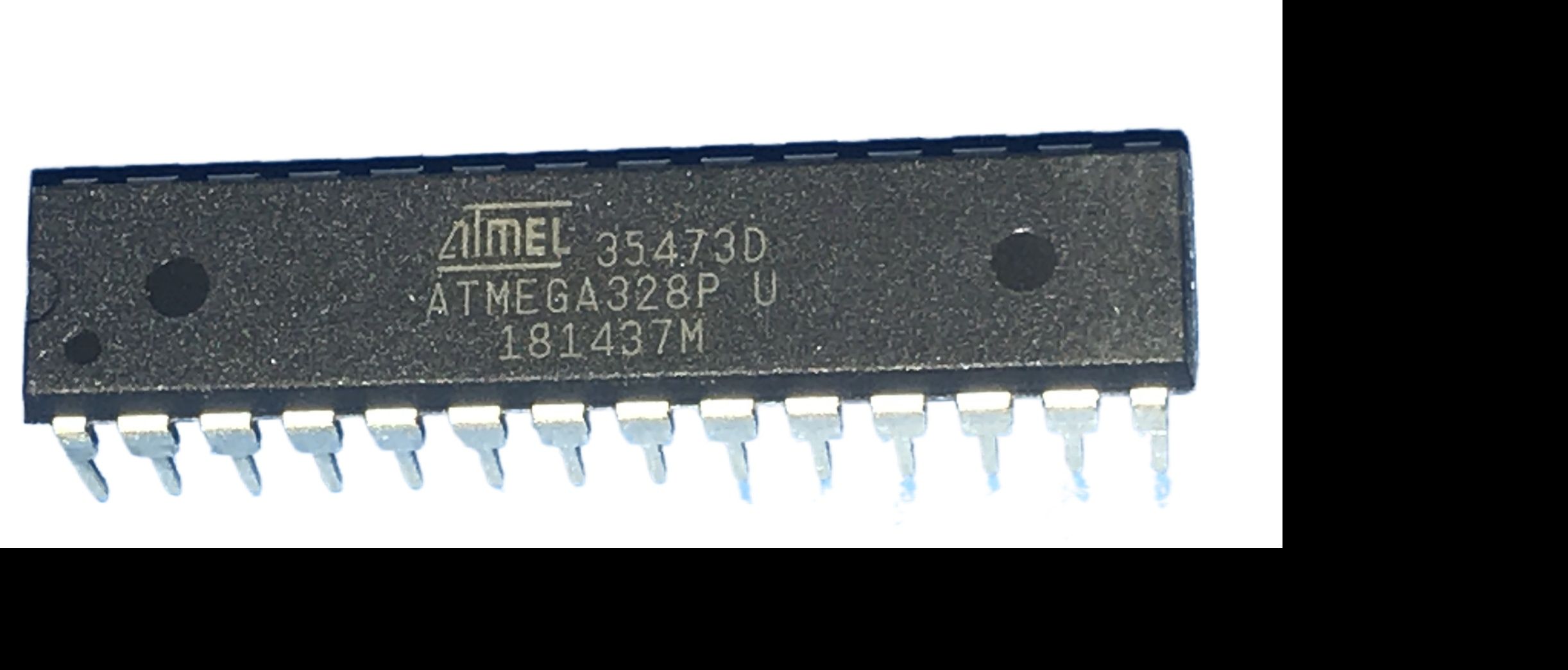


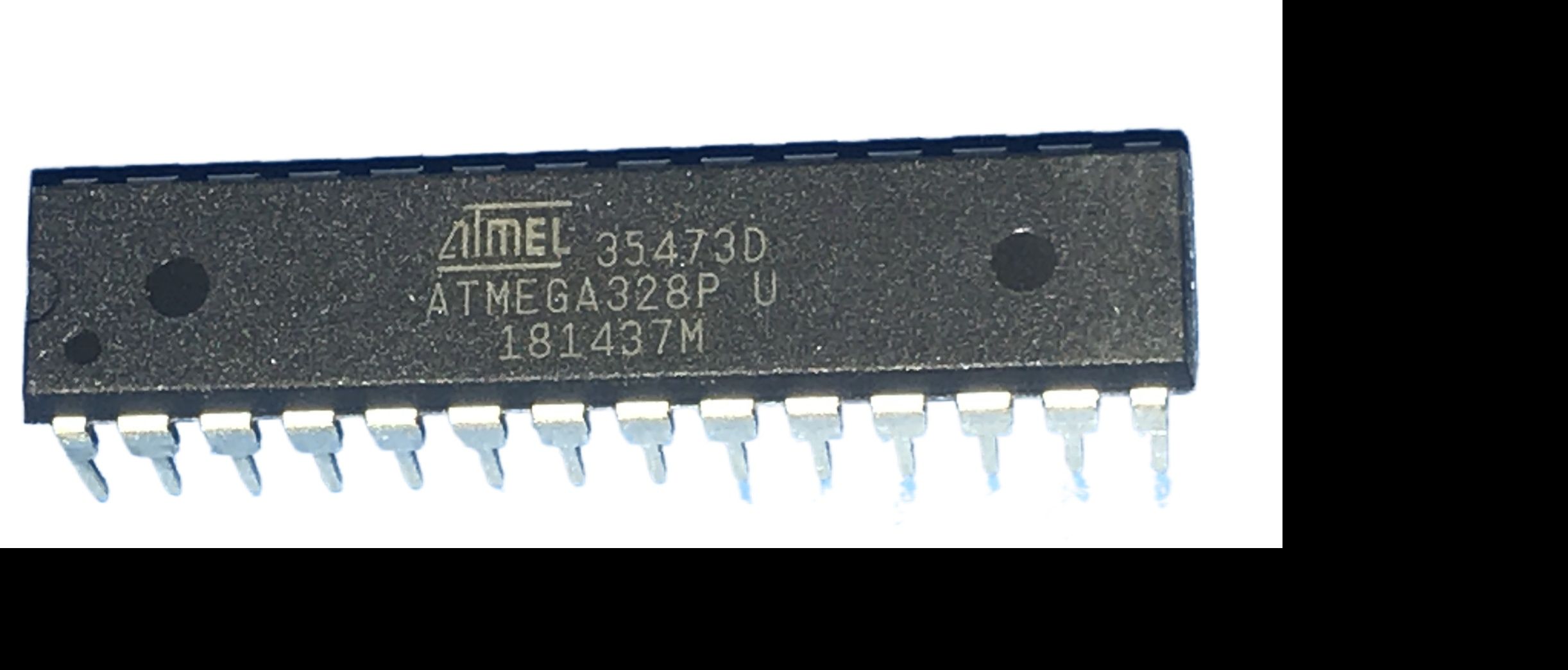
ATmega328P-U Microcontroller Overview
- Type: 8-bit AVR microcontroller.
- Functionality:
- General Purpose Microcontroller: Used for a wide range of applications including embedded systems, IoT devices, and DIY electronics projects.
- Program Storage: Flash memory to store the program code.
- Data Storage: EEPROM and SRAM for data storage.
- Specifications:
- Architecture: 8-bit AVR RISC.
- Operating Voltage: 1.8V to 5.5V.
- Flash Memory: 32KB (with 0.5KB used by the bootloader if used).
- SRAM: 2KB.
- EEPROM: 1KB.
- Clock Speed: Up to 20 MHz.
- I/O Pins: 23 general-purpose I/O pins.
- Timers: Three timers (two 8-bit and one 16-bit).
- ADC: 10-bit ADC with 6 channels.
- Interfaces: SPI, I2C (TWI), and UART.
- PWM: 6 PWM channels.
- Features:
- Low Power Consumption: Various power-saving modes.
- Flexible Timer/Counters: For generating accurate time delays and PWM signals.
- Analog to Digital Converter (ADC): For interfacing with analog sensors.
- Rich Set of I/O Ports: For connecting to external peripherals and devices.
Typical Uses:
- Embedded Systems: Used in a variety of embedded applications including control systems, sensors, and displays.
- IoT Devices: Ideal for Internet of Things applications due to its low power consumption and connectivity options.
- DIY Electronics: Popular in DIY projects, especially with Arduino, which uses this microcontroller.
Key Benefits:
- Versatility: Suitable for a wide range of applications due to its rich feature set.
- Low Power: Various power-saving modes make it ideal for battery-powered applications.
- Ease of Use: Widely supported by development tools and a large community, especially in the Arduino ecosystem.
Example Applications:
- Arduino Projects: Forms the core of Arduino Uno and other Arduino boards.
- Sensor Interfaces: Reads data from analog and digital sensors.
- Control Systems: Used in motor controllers, LED drivers, and other control applications.