

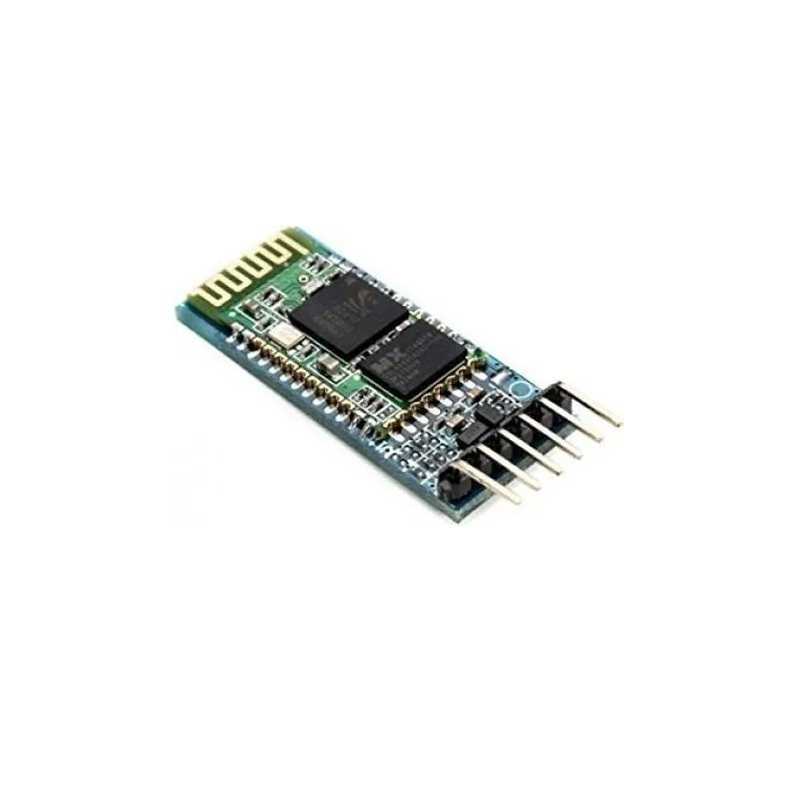
### PWM/Servo Driver - I2C Interface - PCA9685 Overview
1. **Type**: PWM/Servo Driver with I2C Interface
2. **Specifications**:
- **IC Model**: PCA9685
- **Interface**: I2C (Inter-Integrated Circuit)
- **Number of Channels**: 16 PWM channels
- **PWM Frequency**: Adjustable from 24 Hz to 1526 Hz (default 50 Hz for servo motors)
- **Resolution**: 12-bit (4096 steps per channel)
- **Power Supply**: Typically 5V DC
3. **Material**:
- **Chip**: Silicon IC with integrated circuitry for PWM control
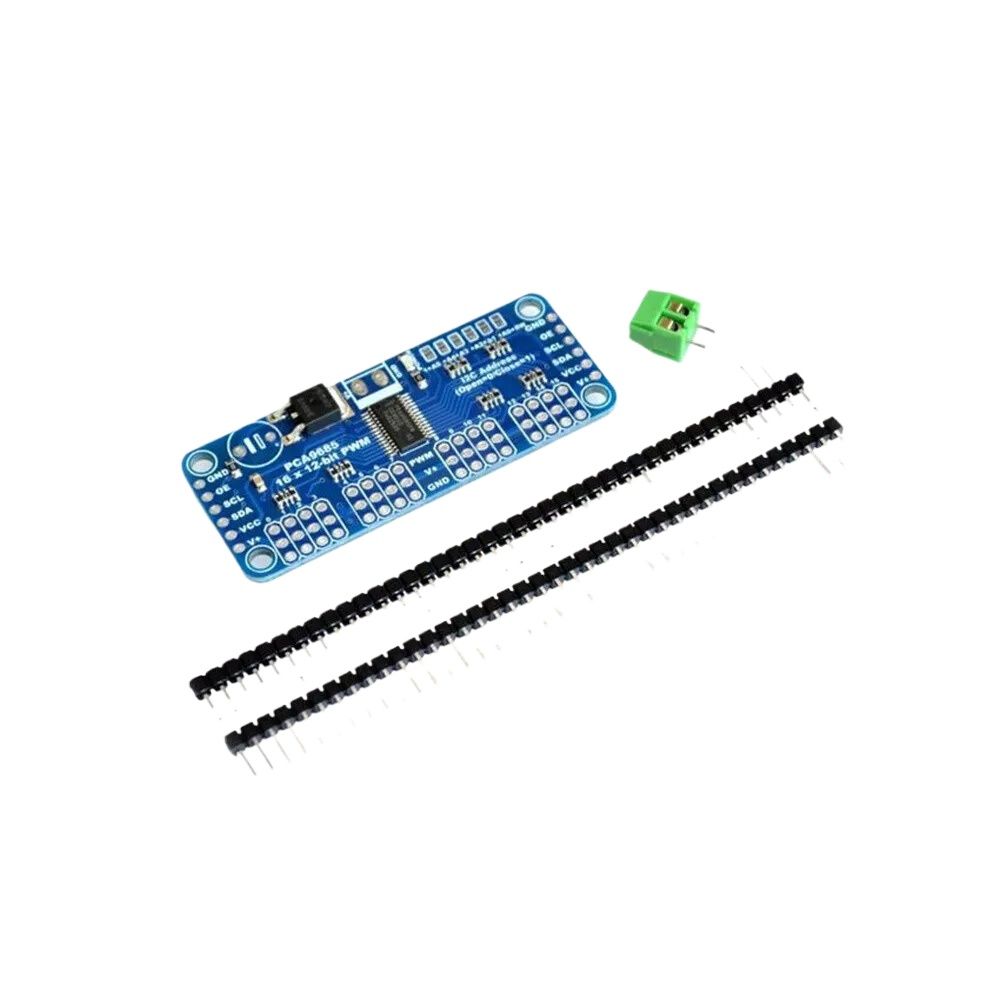
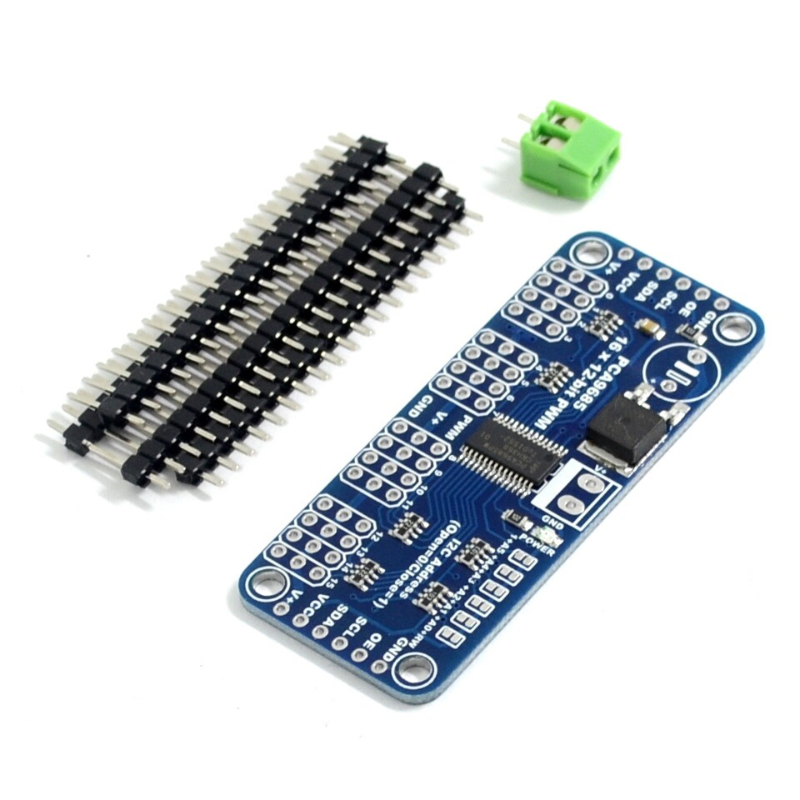
- **PCB**: Printed circuit board with connectors for I2C and servo connections
4. **Functionality**:
- **PWM Generation**: Provides precise Pulse Width Modulation (PWM) signals for controlling servos, LEDs, and other devices.
- **I2C Communication**: Allows control of multiple PCA9685 chips using a single I2C bus, with addresses assigned via jumpers or pins.
- **Servo Control**: Ideal for driving up to 16 servos simultaneously with independent control of each servo's position.
5. **Features**:
- **High Resolution**: 12-bit resolution allows for fine control of PWM signals.
- **Adjustable Frequency**: Frequency can be adjusted for various applications, including servos and LEDs.
- **Multiple Boards**: Multiple PCA9685 boards can be connected on the same I2C bus, expanding the number of controlled channels.
- **Built-in Oscillator**: Includes a built-in oscillator for generating stable PWM signals.
### Typical Uses:
- **Servo Control**: Ideal for robotic arms, UAVs, and other projects requiring precise servo control.
- **LED Lighting**: Can be used for controlling LED brightness and effects in lighting projects.
- **Automated Systems**: Used in systems requiring precise timing and control of multiple outputs.
### Key Benefits:
- **Precision Control**: Provides high-resolution PWM signals for accurate control of servos and other devices.
- **Ease of Use**: I2C interface simplifies communication and control of multiple devices using a single bus.
- **Expandability**: Multiple PCA9685 modules can be daisy-chained to increase the number of controlled channels.
### How to Use:
1. **Connect to I2C Bus**: Wire the PCA9685 to an I2C bus on a microcontroller or single-board computer, like an Arduino or Raspberry Pi.
2. **Power Supply**: Connect the power supply (typically 5V) to the PCA9685 board.
3. **Configure I2C Address**: Set the I2C address using jumpers or pins on the PCA9685 to avoid address conflicts if multiple boards are used.
4. **Initialize and Control**: Use a suitable library or write code to initialize the PCA9685 and control the PWM outputs via I2C commands.
### Example Applications:
- **Robotic Projects**: Control multiple servos for robotic arms, drones, or automated vehicles.
- **Home Automation**: Use for controlling automated blinds, curtains, or other devices requiring precise control.
- **Lighting Systems**: Manage LED arrays with adjustable brightness and effects.
### Installation Tips:
- **Verify Connections**: Ensure all connections, especially I2C and power, are secure and correctly oriented.
- **Check Addressing**: Ensure that each PCA9685 on the I2C bus has a unique address to avoid conflicts.
- **Use Libraries**: Utilize existing libraries for popular microcontrollers (e.g., Adafruit’s PCA9685 library for Arduino) to simplify coding and setup.
### Advantages:
- **High Resolution and Precision**: Allows fine control over PWM signals with 12-bit resolution.
- **Scalability**: Easily expand the number of controlled channels by adding more PCA9685 boards.
- **Versatility**: Suitable for a wide range of applications including servos, LEDs, and more.
The PCA9685 PWM/Servo Driver with I2C interface is a versatile and powerful tool for precise control of multiple PWM outputs. Its high resolution and expandability make it suitable for complex projects requiring detailed control and coordination.